Kasoa, Ghana — What happens when citizens with deeply different views are given the opportunity to listen before they argue?
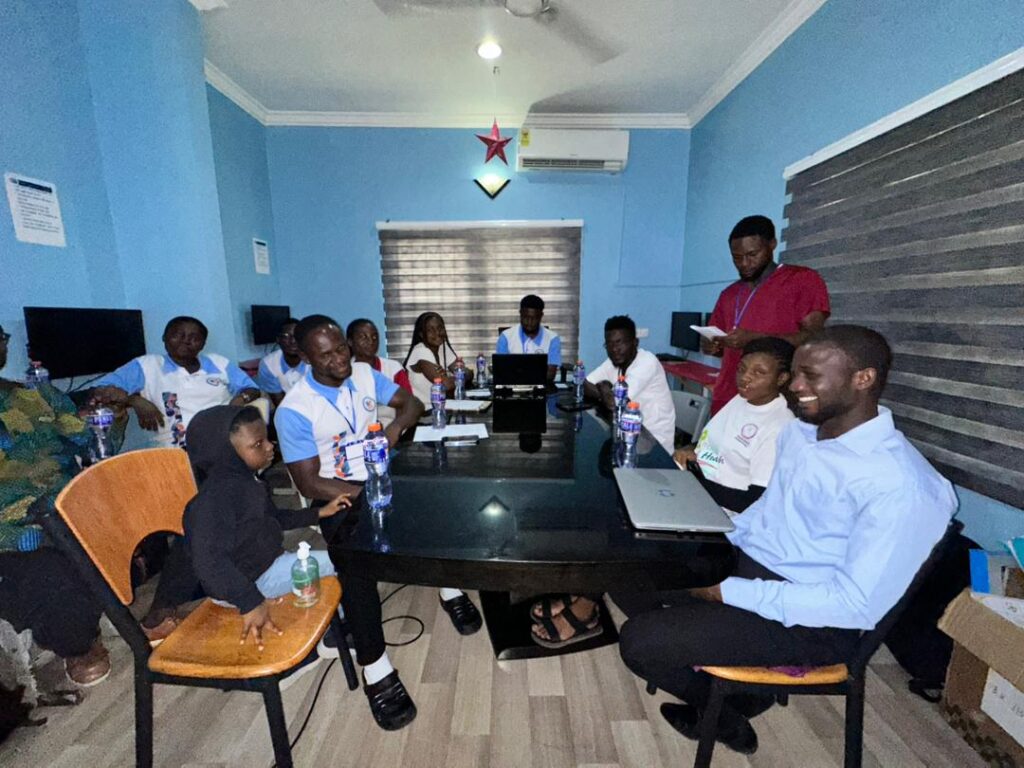
That question was at the heart of a remarkable community dialogue facilitated by Rashid Baba, a fellow of the Free Market Fellowship, who recently completed his capstone project by bringing together educators, parents, and policymakers to examine one of Ghana’s most pressing education challenges—the implementation of inclusive education.
Held at the Alhassan Mmed Event Center in Kasoa, the dialogue demonstrated how structured civic engagement can transform public conversations from blame and polarization into thoughtful problem-solving.
Turning Learning into Leadership
One of the defining features of the Free Market Fellowship is its emphasis on practical application. Every fellow is challenged to move beyond classroom discussions by designing and implementing a capstone project that addresses a real issue within their local community.
For Rashid Baba, that issue was the growing gap between Ghana’s ambitious Inclusive Education Policy and the realities experienced by schools, teachers, and families.
Rather than organizing a protest or advocating a predetermined policy position, Rashid chose a different path. He convened a carefully facilitated dialogue that created space for multiple perspectives to be heard.
The participants included mainstream teachers, special educators, parents of children with disabilities, parents of non-disabled children, district education officials, school leaders, and disability advocates.
Moving Beyond “Who Is Right?”
Inclusive education often generates emotionally charged debates.
Advocates rightly emphasize every child’s right to quality education, while teachers point to overcrowded classrooms, inadequate training, and limited resources. Parents worry about both inclusion and the quality of learning, while policymakers struggle with difficult funding decisions.
Instead of asking participants to choose sides, the dialogue encouraged them to examine trade-offs.
As conversations unfolded, participants began to recognize that many of their disagreements were rooted not in opposing values, but in different lived experiences.
One teacher described managing a classroom of more than fifty pupils, including children with undiagnosed learning difficulties, without specialised training or classroom support.
In response, a parent admitted that they had never fully appreciated the challenges teachers face on a daily basis.
Moments like these shifted the conversation away from assigning blame and toward identifying practical solutions.
Building Understanding Through Dialogue
Throughout the session, participants explored several difficult questions:
How can Ghana expand inclusive education without weakening special schools?
What support do teachers need to succeed?
How should limited public resources be allocated?
What does meaningful inclusion actually require?
Rather than seeking unanimous agreement, the dialogue helped participants understand the complexity of implementation.
One proposal that generated significant interest was the idea of transforming underutilized special schools into district resource centres that continue serving children with severe disabilities while providing technical support to mainstream schools.
By the end of the discussion, many participants who had entered the room with fixed positions acknowledged that sustainable solutions would require balancing rights, institutional capacity, and available resources.
A Fellowship Designed for Real-World Impact
The project reflects the broader philosophy of the Free Market Fellowship.
The Fellowship equips emerging African leaders with the intellectual tools needed to analyze public policy, understand incentives, appreciate institutional realities, and facilitate civic dialogue without deepening polarization.
Rather than encouraging ideological activism, the programme challenges fellows to become thoughtful facilitators capable of bringing communities together around complex public issues.
For Rashid, the capstone project became more than a graduation requirement—it became an opportunity to practice the leadership principles developed throughout the Fellowship.
Measuring Success Beyond Consensus
Twenty community stakeholders participated in the dialogue.
Participants represented multiple sectors and perspectives, creating one of the most diverse conversations on inclusive education held within the community.
By the conclusion of the event:
Most participants demonstrated a stronger understanding of the policy trade-offs involved in inclusive education.
The overwhelming majority described the discussion as respectful and constructive.
No participant reported increased hostility despite the sensitive nature of the topic.
Most expressed interest in participating in future dialogues on education policy.
Perhaps the most significant outcome was not that participants agreed on every issue.
It was that they left with a deeper understanding of one another.
Ideas That Strengthen Institutions
At Face of Liberty International, we believe that strong societies are built not only through better policies, but through better conversations.
When citizens learn to examine trade-offs, respect competing experiences, and engage constructively across differences, they strengthen the civic culture upon which enduring institutions depend.
Rashid Baba’s capstone project is a powerful example of what becomes possible when young African leaders are equipped not merely to advocate for change, but to facilitate the conversations that make meaningful reform possible.
His success demonstrates the purpose of the Free Market Fellowship: developing principled leaders who transform ideas into action and communities into spaces for thoughtful dialogue.
As our fellows continue implementing capstone projects across Africa, stories like this remind us that lasting change rarely begins with louder voices.
It begins with leaders who know how to bring people together, ask better questions, and build trust where division once existed.

